

Paris, France/ Kinshasa, Democratic Republic of the Congo (DRC) – 16 July 2026
As part of the Global Fund’s eighth round of grants (GC8), which covers funding for three years and for which applications must be submitted by the end of July, Médecins Sans Frontières (MSF) has learned that North Kivu—a province largely controlled by the AFC/M23—will no longer be among the primarily selected provinces receiving support for malaria control. While malaria has been the leading cause of morbidity in the Democratic Republic of Congo (DRC), including in North Kivu, the people of this province may be deprived of essential funding to combat the disease.
GC8 is the Global Fund’s next three-year funding cycle (2027–2029), through which resources are allocated to countries to fight malaria, HIV, and tuberculosis. Funding decisions are based on national priorities and significantly influence access to healthcare services in high-burden settings.
As things stand, the North Kivu province would be excluded from future funding priorities for malaria control, while its health system may soon become overwhelmed by the ongoing Ebola epidemic. The similarity between the early symptoms of malaria and those of Ebola can complicate diagnosis and delay the initiation of appropriate treatment, which further increases the strain on health care systems that are already under significant pressure.
“North Kivu is one of the provinces hardest hit by armed conflict. Repeated population displacements, food insecurity, and barriers to accessing care create conditions that increase both exposure to malaria and the risk of developing a severe form of the disease,” warns Stéphane Doyon, MSF program manager.
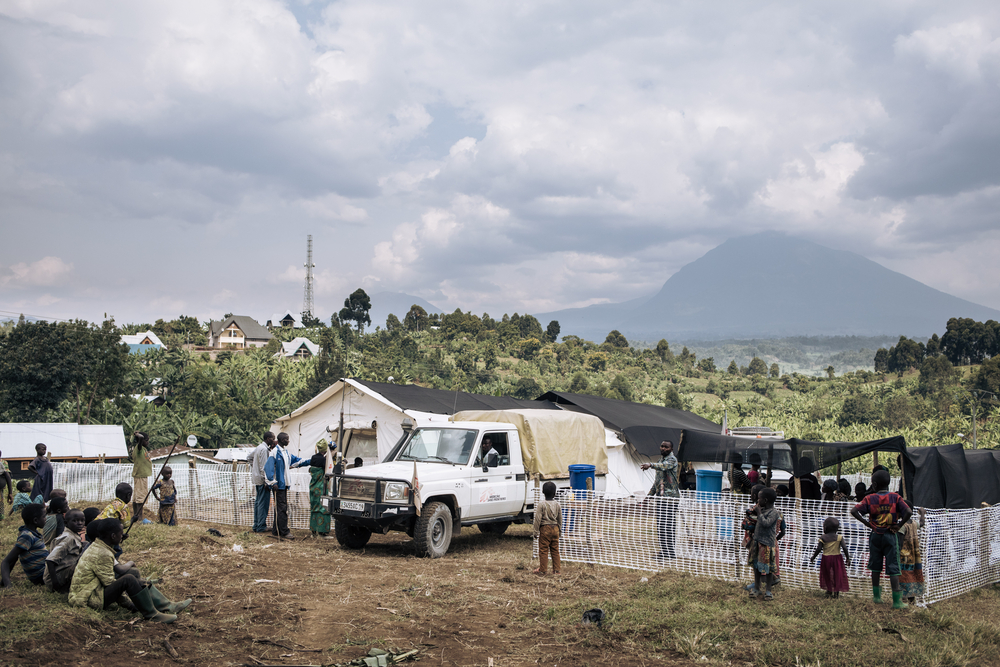
Forced to flee their homes due to fighting between armed groups allied with the Congolese government and the AFC/M23, many people are seeking refuge in forests or other remote areas, where the risk of exposure to malaria is particularly high and access to healthcare remains very limited. In 2025, in three of the health zones in North Kivu where MSF implements programs in health centres and hospitals run by the Ministry of Health (Bambo, Kibirizi, and Rutshuru), malaria accounted for between 48% and 58% of consultations. Over 255,000 simple cases and over 26,000 severe cases treated in these areas by MSF, the Ministry of Health and its partners combined. Out of the overall cases, over 165,560 cases were treated in health structures supported by MSF.
Basic malaria prevention measures have already been scaled back in some areas. In areas supported by the Global Fund, no distribution of mosquito nets has taken place since June 2023. In 2025, no malaria control supplies reached North Kivu between July and December due to access issues. Faced
with these recurring shortages, MSF has had to purchase and supply treatments and screening tests to fill the gaps in different health centres. In 2025, MSF provided 53% of treatments for uncomplicated malaria and 35% of treatments for severe malaria in health structures where MSF, the Ministry of Health or partners work in the Kibirizi, Bambo and Rutshuru health zones—a situation that is unsustainable in terms of long-term prevention and control of the disease across the vast province of North Kivu.
This is unfolding against the backdrop of an increasingly difficult health situation in North Kivu, marked by persistent malnutrition and recurrent outbreaks of preventable diseases. Malnutrition remains a growing concern across the province and is consistently observed in many MSF-supported health structures. When combined with malaria, malnutrition significantly increases the risk of severe illness and death, particularly among children.
MSF calls on the Global Fund and the authorities in Kinshasa to fully reintegrate North Kivu into the GC8’s malaria programming and resource allocation, and urges Congolese health authorities to ensure an equitable distribution of resources, based on the vulnerability of populations and the burden of the disease.
-
Related:
- funding
- Malaria
- MSF in DRC
- USAID